Trademark defense
Registration refusals, oppositions, and infringement claims against the brands clients have built.
Trademark and First Amendment
Ron Coleman represented Simon Tam from the USPTO through the Federal Circuit and argued the successful en banc appeal that struck down the disparagement bar. The Supreme Court later affirmed the constitutional result.
Simon Tam fronts a dance-rock band called The Slants. The band chose the name to reclaim a slur directed at Asian Americans. When Tam applied to register the name as a federal trademark, the U.S. Patent and Trademark Office refused: under the Lanham Act's disparagement bar, it found the name disparaging and would not register it, no matter how the band itself meant it.
The refusal did not stop the band from using its name. It did deny the registration benefits that ordinary businesses rely on, purely because a government office disapproved of the message it read into the mark.
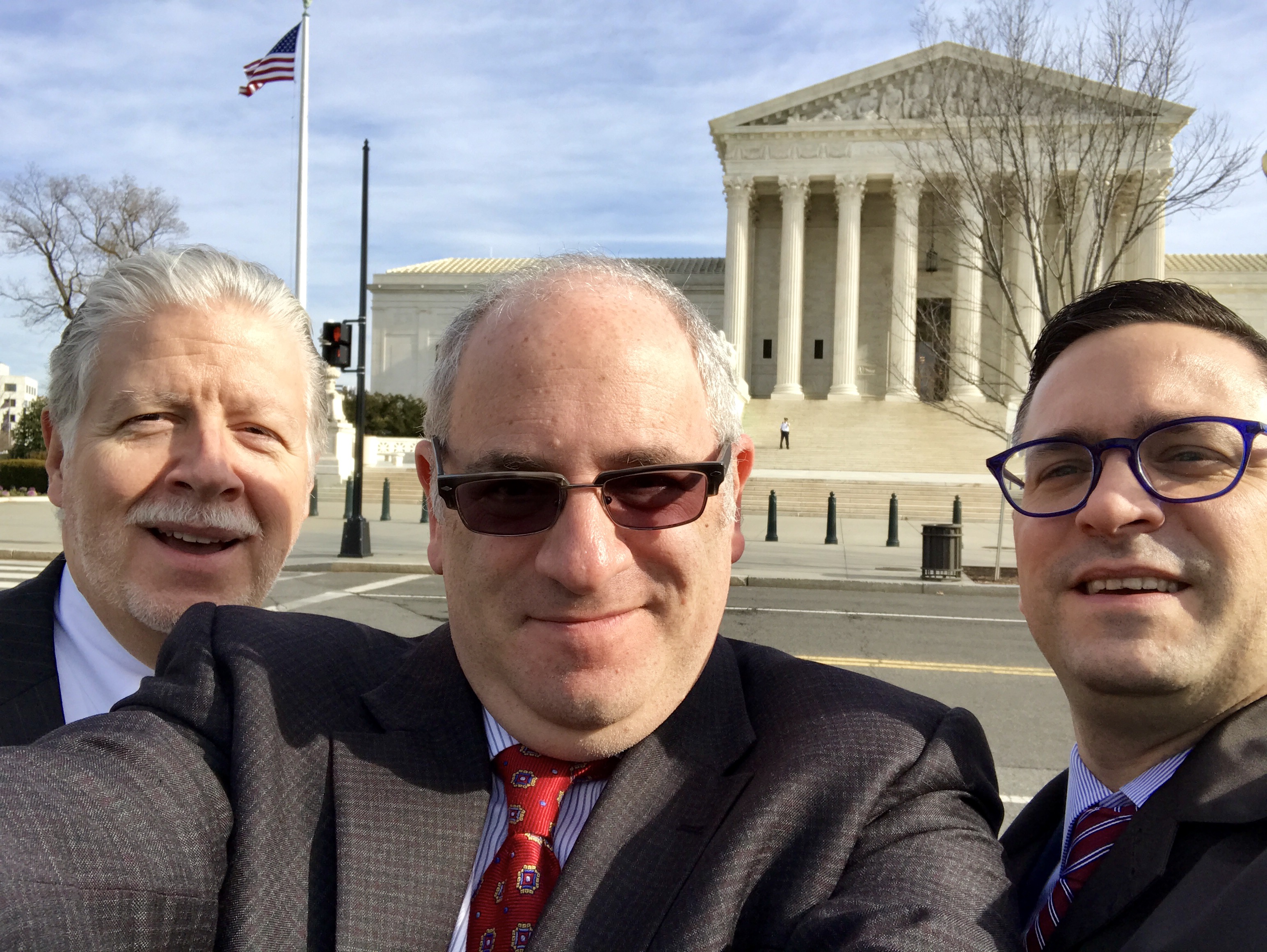
The case moved through every level of the trademark system and then through the federal courts. The en banc Federal Circuit decided the case in 2015; the Supreme Court affirmed in 2017.
Ron Coleman represented Simon Tam from the USPTO refusal through the Trademark Trial and Appeal Board and the Federal Circuit, and he argued the successful appeal before the en banc Federal Circuit. When the government petitioned to the Supreme Court, John C. Connell presented the oral argument there.
A Federal Circuit panel first ruled against Tam, In re Tam, 785 F.3d 567 (Fed. Cir. 2015). The full court then reheard the case en banc and held that the disparagement bar violates the First Amendment: In re Tam, 808 F.3d 1321 (Fed. Cir. 2015) (en banc). The government could not refuse registration because it found a mark's message offensive.
The Supreme Court granted review and affirmed the constitutional result in Matal v. Tam, 582 U.S. 218 (2017). The disparagement bar is no longer the law.
The case sits at the meeting point of the firm's practice: trademark defense, the First Amendment, and appellate advocacy. The same skills apply when a client's brand is challenged at the trademark office, when a publication faces a claim over what it printed, or when a speaker is told to stop talking.
Registration refusals, oppositions, and infringement claims against the brands clients have built.
Defamation defense and speech claims for publishers, writers, and anyone sued over what they said.
Briefing and argument when the first decision gets the law wrong, in the federal circuits and beyond.
In re Tam, 808 F.3d 1321 (Fed. Cir. 2015) (en banc); Matal v. Tam, 582 U.S. 218 (2017).